
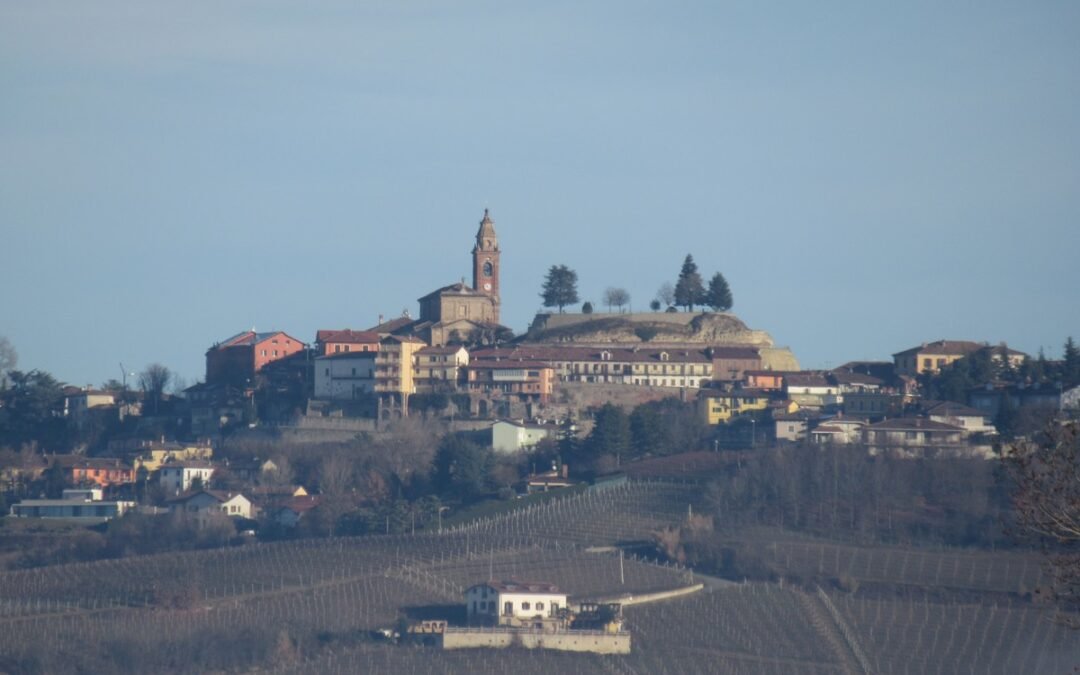
To explore Monforte d’Alba, walk uphill from the lower town to the old village, home to the bell tower and the Horszowski Auditorium. This destination in the Langhe, in the province of Cuneo, suits visitors looking for a relaxed walk through architecture, music and a wine-growing landscape. Allow half a day for a first visit: this is our planning suggestion, to adjust around stops and any indoor visits.
Where is Monforte d’Alba, and why visit?
Monforte d’Alba lies in Piedmont, in the hills of the Langhe south of Alba. The oldest part occupies the top of the settlement, marked by a tower rising above the roofs. The village belongs to I Borghi più belli d’Italia, whose description gives an elevation of 528 metres and explains how its streets follow the slope.
You can enjoy the village without booking a wine tasting. The main experience is the relationship between uphill lanes, historic buildings and open spaces. Vineyards surround the town; respect private property and permitted access when exploring the countryside.
What to see in the upper village
The bell tower and the former church of Santa Maria
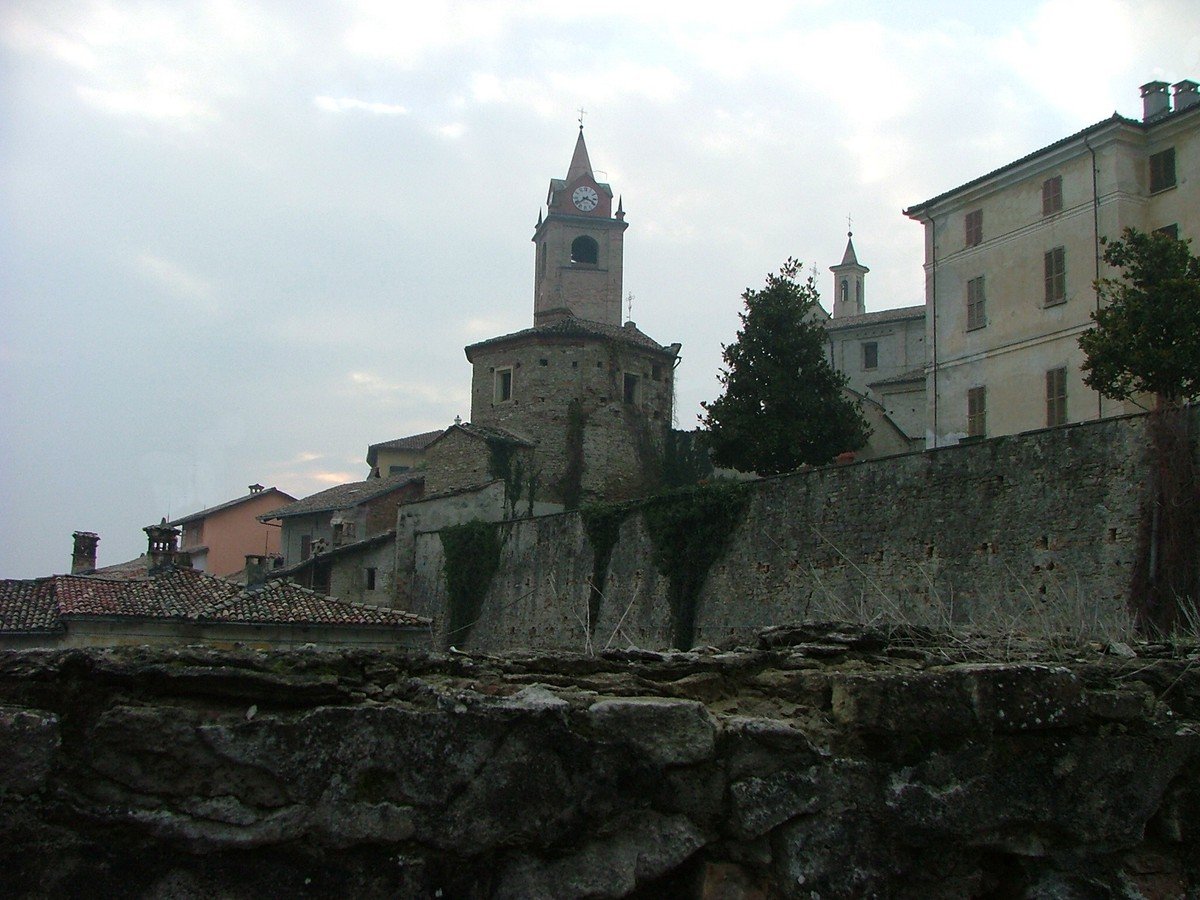
The bell tower is the old village’s visual landmark. According to the municipality, it began as a square watchtower and was later incorporated into the church of Santa Maria, demolished in the early twentieth century. Its history reveals how the settlement changed, with a defensive structure becoming a church tower.
Look at it from the square and nearby lanes, without assuming that visitors can climb it. Check interior access separately. With children, try spotting the tower from different points along the route: it provides a useful landmark during the walk.

The Horszowski Auditorium
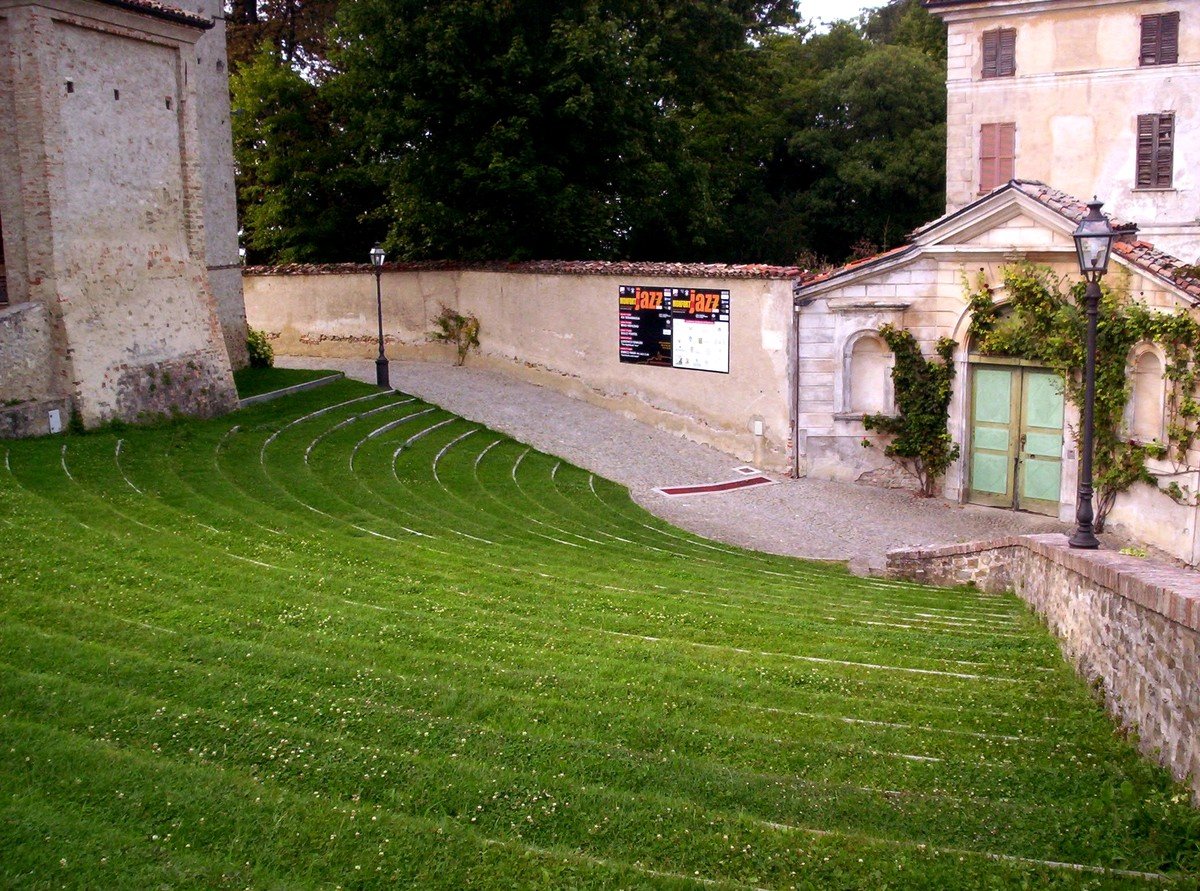
Near the tower, the Horszowski Auditorium is an outdoor amphitheatre shaped by the natural slope. The municipality records the inaugural concert given by pianist Mieczysław Horszowski in summer 1986. The Langhe Monferrato Roero tourism organisation places it between the oratories of Sant’Agostino and Santa Elisabetta and the Palazzo Scarampi area.
Here, the village itself becomes a setting for music. Notice the terraces and their relationship with the surrounding buildings. Seeing the site and attending a concert require different planning: dates, tickets and availability depend on the actual programme. This guide does not announce scheduled events.

Palazzo Scarampi and the lanes
Palazzo Scarampi completes the historic ensemble. Fondazione Bottari Lattes explains that the present building replaced an earlier castle and was renovated in 1833. On this walk, treat it as an exterior stop; access to gardens or rooms should not be assumed.
Between landmarks, take time to explore the lanes. Choose your direction according to what catches your eye and the conditions underfoot, leaving room to retrace your steps. Uphill stretches are part of the experience: comfortable shoes and an unhurried pace help.
Madonna della Neve: a church distinct from the old tower
The parish church of Madonna della Neve is another landmark. The municipal description identifies its neo-Gothic style and dates construction to 1909–1912, following Giuseppe Gallo’s design. Its façade, approached by a broad staircase, provides a contrast with the older settlement above.
Plan to enter only after checking opening arrangements and religious services. For a short visit, the exterior can be included before or after the climb to the upper village.
A half-day walking itinerary
- Get your bearings: locate Madonna della Neve and the route towards the old village.
- Walk uphill: explore the lanes with short breaks, without setting rigid walking times.
- Tower and auditorium: make the historic ensemble the main stop.
- Return and pause: head back down, then decide whether to stay for lunch or continue to another destination.
This sequence is an editorial suggestion, not a waymarked route with certified accessibility. Ask the tourist office about parking, traffic restrictions and mobility requirements before arrival. If travelling by public transport, check both outward and return services for your date; connections between villages should not be taken for granted.
When to visit: daylight, weather and seasons
In late autumn and winter, plan the walk around the middle of the day and check the weather before setting off. Fog and poor visibility can change the landscape: visit for the village as well as the views. Assess slopes and steps carefully in rain or icy conditions.
In summer, the auditorium is associated with cultural programming. If a concert is your reason for travelling, check the organiser’s calendar. In every season, book any winery visit separately and confirm the menu and availability of your chosen restaurant.
Where else to go in the Langhe
Choose one further stop that fits your available time: La Morra for another village and viewpoint, or Grinzane Cavour for the castle. Leave time to enjoy Monforte rather than rushing between several destinations.
Frequently asked questions
How long do you need in Monforte d’Alba?
We suggest half a day for an initial outdoor walk, including the climb, breaks and return. Concerts, museums and tastings require additional time, to confirm with their organisers.
What are the main sights?
The upper village with its bell tower, Horszowski Auditorium and Palazzo Scarampi, plus the parish church of Madonna della Neve.
Can you visit with children or a pushchair?
The walk can be adapted for a family, but the old village has slopes and steps. Ask the tourist office for current route advice for pushchairs or accessibility needs.
Is the auditorium indoors?
No, it is an outdoor venue. For performances, also check the arrangements for bad weather.
Sources and verification
Information checked on 21 November 2026. Official and cultural sources consulted for landmarks, history and geography. The route is an editorial suggestion, not a personal travel account. Check opening arrangements, access, services and programmes for your date.
- Comune: Torre Campanaria
- Comune: Auditorium Horszowski
- Comune: Madonna della Neve
- Langhe Monferrato Roero: Auditorium Horszowski
- Fondazione Bottari Lattes: Monforte d’Alba
- I Borghi più belli d’Italia: Monforte d’Alba
Cover photograph credits
Monforte d’Alba. Archive photograph, 5 January 2023. Superchilum / Wikimedia Commons, CC BY-SA 4.0. Cropped to 3:2 and resized to 1200×800. Source and photographer · Licence.

Archive photographs show Monforte d’Alba on earlier dates, not current access arrangements or installations. No image was generated with AI.