
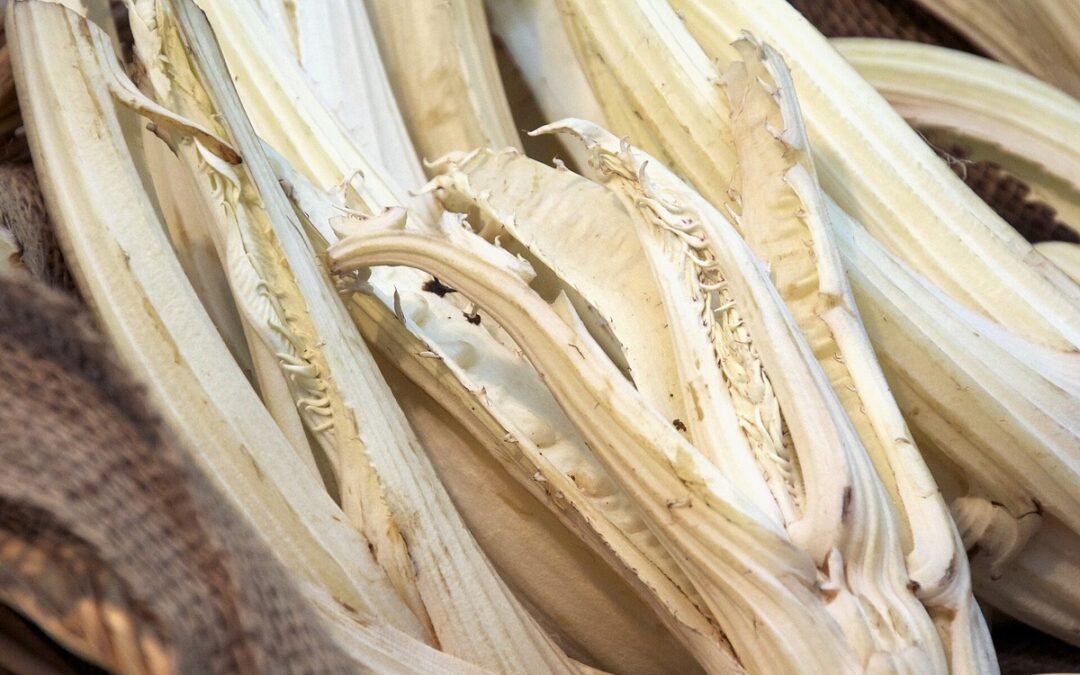
Cardo gobbo from Nizza Monferrato is a vegetable from the Asti area’s culinary tradition: pale stalks, a crisp texture and a flavour softened by cultivation underground. In autumn, it is a product worth discovering to explore Valle Belbo cooking beyond its best-known pairing, bagna cauda.
It is listed among Piedmont’s Traditional Agri-food Products and is a Slow Food Presidium. These recognitions identify its connection to the area; they should not be confused with PDO or PGI designations.
Where it comes from: Nizza Monferrato and Valle Belbo
The production area includes Nizza Monferrato and nearby municipalities in the province of Asti. The sandy soils of Valle Belbo provide the setting for this crop and the work of the cardaroli, its growers. The reference variety is Spadone, mentioned by both the regional entry and the Presidium.
For an introduction to local towns and landscapes, start with our Langhe and Monferrato guide. The product provides a culinary thread for discovering the Asti area; a producer visit requires direct contact, rather than assuming fields are open to the public.
Why it becomes curved and when it is in season
The curved shape comes from blanching underground. Plants are bent and covered: during this stage the stalks lose chlorophyll and become paler and more tender. The curve is therefore a characteristic, not a defect to remove.
PiemonteAgri places the beginning of harvest in the first ten days of October. Its association with autumn and winter cooking makes November a suitable time to look for it. Actual availability nevertheless depends on production and the seller: the agricultural season does not promise stock at every market.
How to choose and prepare it
When buying a cardoon, ask about origin and variety: its name means more than simply a curved shape. White, crisp, sweet stalks are the characteristics regional sources describe for the Nizza product.
- Check and separate the stalks. Remove damaged parts and work with small quantities at a time.
- Remove the strings. Thorough cleaning is particularly helpful when eating it raw.
- Rinse and prepare acidulated water. PiemonteAgri recommends lemon water to limit darkening after cleaning.
- Decide how to use it before cutting. Choose manageable pieces for dipping; for a cooked preparation, follow the cuts and times in your selected recipe.
Raw with bagna cauda, and more
A distinctive feature of the Nizza cardoon is that it can also be enjoyed raw. Its traditional partner is Piedmontese bagna cauda, with which its texture provides an interesting contrast. Add it to the vegetable platter without turning the accompaniment into another complicated preparation.
Slow Food also mentions cooked uses, from soups to stuffed or fried versions. At home, we suggest choosing one preparation and letting the vegetable remain recognisable: a product guide does not replace a complete recipe with verified quantities and cooking times.
Frequently asked questions
Can cardo gobbo from Nizza Monferrato be eaten raw?
Yes: regional sources and Slow Food describe eating it raw after thorough cleaning, including with bagna cauda.
Is it a PDO product?
The consulted sources identify it as a Piedmontese PAT and a Slow Food Presidium. These are different recognitions from PDO and PGI.
Is it only for bagna cauda?
No. It can also be cooked. Its pairing with the Piedmontese sauce is a starting point, not the only possibility.
Continue exploring ingredients and traditions in our Piedmontese food and wine archive, automatically updated with new articles.
Sources and credits
Information checked on 14 November 2026: PiemonteAgri – Cardo gobbo di Nizza Monferrato; Fondazione Slow Food – Presidio; Biodiversità agricola del Piemonte.
Featured image: detail of cardo gobbo from Nizza Monferrato, photograph by Paola Sucato (2012), from Wikimedia Commons, CC BY 2.0. Proportional crop and resize to 1200 × 800 pixels. Archive photograph of the product: it does not depict a venue or event and does not document an editorial visit.